Guide
How to Start an Etsy Shop in 2026: Step-by-Step Guide for Beginners
By Jordan Ellis · Updated 2026-03-18
Starting an Etsy shop in 2026 is one of the most accessible ways to turn your creative skills into real income. This step-by-step guide walks you through every stage — from choosing your niche and setting up your account to optimizing listings for Etsy search and shipping your first order — so you can launch with confidence and start earning within weeks.
Written by Jordan Ellis, Etsy Seller & Creative Business Strategist · Last updated March 18, 2026
This article contains affiliate links. If you purchase through our links, we may earn a small commission at no extra cost to you. See our affiliate disclosure for details.
 Hero visual for this section
Table of Contents
 Comparison visual for Table of Contents
- Why Start an Etsy Shop in 2026?
- What You Need Before You Open Your Shop
- Step 1: Choose Your Niche and Products
- Step 2: Create Your Etsy Account
- Step 3: Set Up Your Shop Preferences
- Step 4: Name Your Etsy Shop
- Step 5: Create Your First Listings
- Step 6: Master Etsy SEO
- Step 7: Set Your Pricing Strategy
- Step 8: Configure Shipping
- Step 9: Set Up Payments and Billing
- Step 10: Launch and Get Your First Sale
- Etsy Seller Plans Compared: Free vs Plus
- Essential Tools for New Etsy Sellers
- Common Mistakes to Avoid
- Frequently Asked Questions
- Sources & Methodology
Why Start an Etsy Shop in 2026?
 Infographic visual for Why Start an Etsy Shop in 2026?
Etsy remains one of the strongest marketplaces for creative sellers heading into 2026. The platform reported over 90 million active buyers in its most recent earnings call, and the demand for handmade, vintage, and digital products continues to grow year over year.
What makes 2026 particularly interesting is a set of platform changes that benefit new sellers. Etsy has rolled out improved onboarding tools, expanded its advertising options for shops with smaller budgets, and invested heavily in AI-powered search that rewards well-optimized listings regardless of shop age.
Here is why now is the right time:
- Low startup costs. You can open a shop and list your first product for under $1. No inventory warehouse, no storefront lease, no business loan required.
- Built-in audience. Unlike building a standalone website from scratch, Etsy puts your products in front of millions of buyers who are already searching for what you make.
- Flexible schedule. Whether you want a side hustle or a full-time business, Etsy scales with your availability.
- Digital products are booming. Printable planners, SVG files, social media templates, and digital art require zero shipping and near-zero cost of goods sold.
The barrier to entry has never been lower, but the sellers who succeed are the ones who approach their shop strategically. That is exactly what this guide is built to help you do.
What You Need Before You Open Your Shop
 Setup visual for What You Need Before You Open Your Shop
Before you click "Open Your Etsy Shop," gather these essentials so the setup process goes smoothly:
- A product idea. You need at least one item ready to photograph and list. It can be handmade, vintage (20+ years old), or a craft supply.
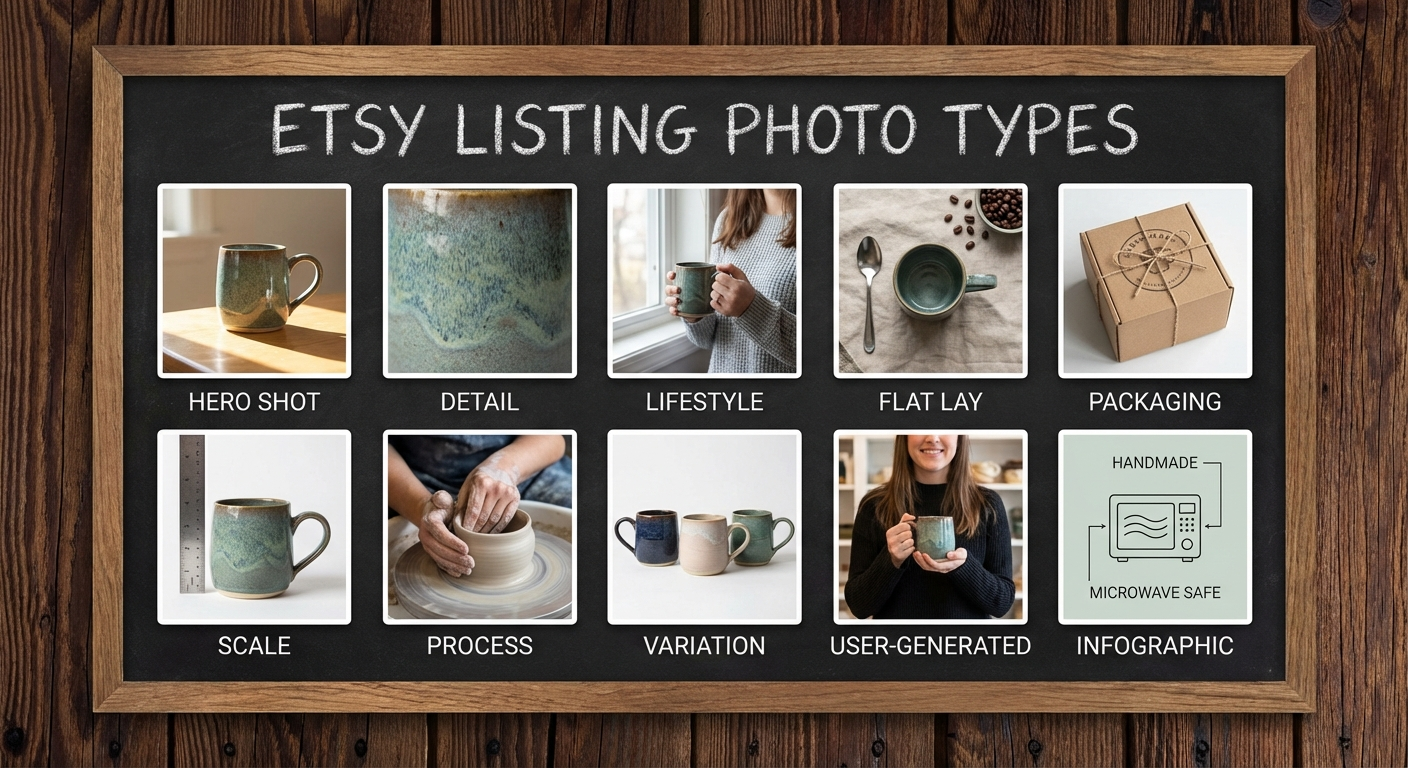
- High-quality photos. Etsy is a visual platform. You will need at least 5 photos per listing — and your first image is what determines whether a buyer clicks.
- A bank account. Etsy deposits your earnings directly. You will connect a bank account during setup.
- A credit or debit card. Etsy charges listing fees and other costs to a card on file.
- A government-issued ID. Etsy may request identity verification, especially for new shops.
- Basic branding elements. A shop name, a logo or profile photo, and a banner image that communicates what you sell.
If you are selling physical products, you should also have your packaging materials ready and a general shipping strategy in mind. We will cover shipping setup in detail later.
Step 1: Choose Your Niche and Products
 Detail visual for Step 1: Choose Your Niche and Products
This is the single most important decision you will make. The niche you choose determines your competition, your pricing power, and ultimately whether your shop gains traction or gets buried.
How to Find a Profitable Niche
Start by answering three questions:
- What can you make or source consistently? A beautiful one-off product does not build a business. You need something repeatable.
- Is there proven demand? Search Etsy for your product idea. If you see multiple shops with hundreds or thousands of sales selling similar items, that is a strong signal — not a warning to stay away.
- Can you differentiate? Look at the top sellers in your category. Identify what they are missing — better customization options, faster shipping, a unique design style, or an underserved sub-niche.
Top-Performing Product Categories in 2026
| Category | Avg. Price Range | Competition Level | Profit Potential |
|---|---|---|---|
| Digital planners & templates | $3–$15 | High | Very High (no COGS) |
| Personalized jewelry | $25–$75 | High | High |
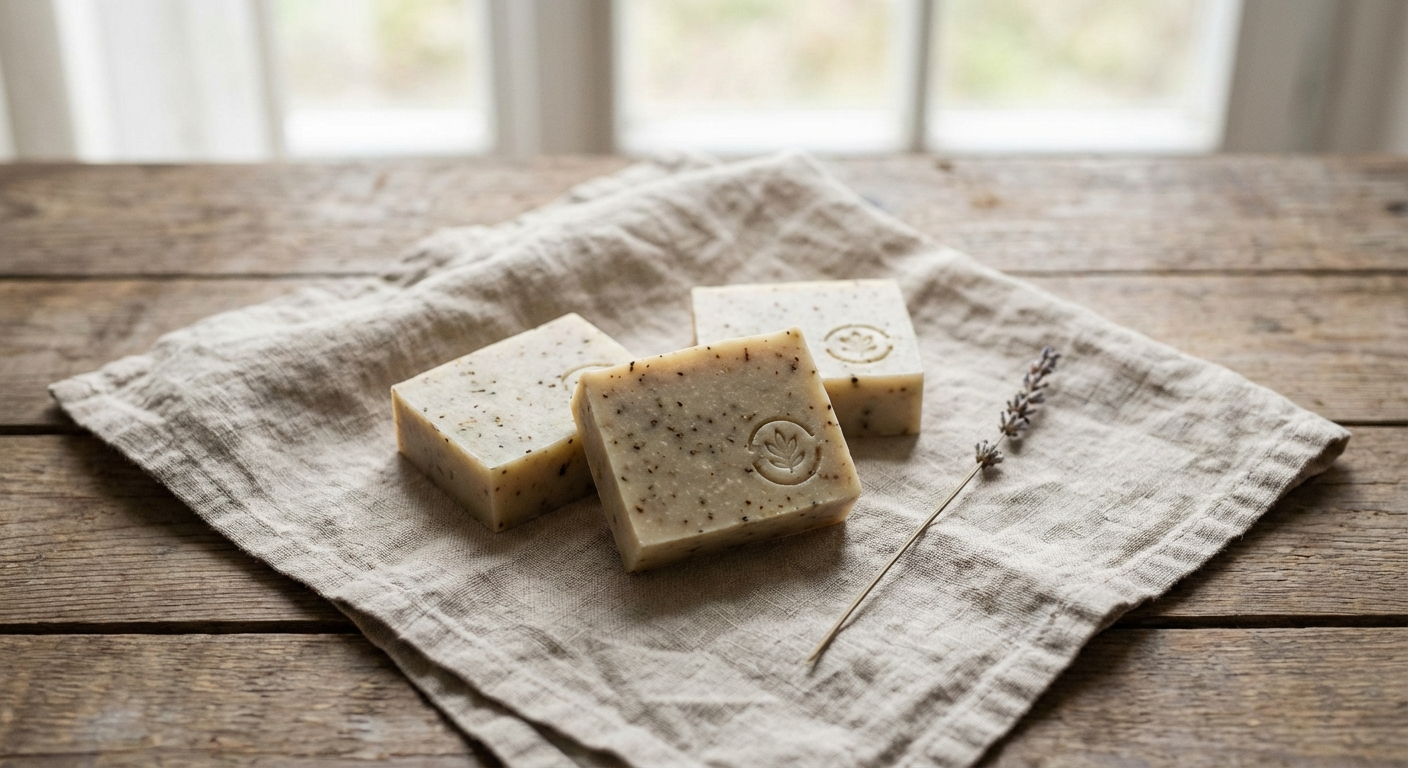
| Handmade candles & soaps | $12–$35 | Medium | Medium |
| SVG/cut files for Cricut | $2–$8 | High | Very High (no COGS) |
| Custom pet portraits | $30–$120 | Medium | High |
| Vintage clothing (Y2K, 90s) | $20–$80 | Medium | Medium-High |
| Wedding invitations & signage | $8–$50 | High | High |
| Stickers & vinyl decals | $3–$12 | Very High | Medium |
Digital products deserve special attention for beginners. They eliminate shipping headaches, scale infinitely, and let you test product ideas with minimal risk. If you have design skills or are willing to learn tools like Canva, this is the fastest path to your first sale.
For more ideas on high-margin Etsy products, check out our guide on best products to sell on Etsy.
Step 2: Create Your Etsy Account
 Lifestyle visual for Step 2: Create Your Etsy Account
Head to etsy.com and click "Sign in" in the top right corner. If you already have an Etsy buyer account, you can use that same account to open a shop.
Here is the step-by-step process:
- Register or sign in. Create an account with your email, or sign in with Google or Apple.
- Navigate to selling. Click on your account icon, then select "Sell on Etsy." Alternatively, go directly to etsy.com/sell.
- Click "Open your Etsy shop." This begins the guided setup wizard.
Etsy's setup wizard walks you through the remaining steps in order. You will not be charged anything until you publish your first listing.
Pro Tip: Use a Dedicated Email
If you plan to treat this as a real business (and you should), create a separate email address for your Etsy shop. This keeps your business notifications, customer inquiries, and Etsy updates separate from your personal inbox.
Step 3: Set Up Your Shop Preferences
 Product Lineup visual for Step 3: Set Up Your Shop Preferences
Etsy will ask you to configure a few basic preferences:
- Shop language. This is the language you will use to describe your items. English is the most broadly accessible, but choose the language your target customers speak.
- Shop country. Your physical location. This affects tax calculations and available payment methods.
- Shop currency. Choose the currency you want to be paid in. Buyers will see prices converted to their local currency automatically.
These settings can be changed later, but getting them right from the start avoids confusion.
Step 4: Name Your Etsy Shop
 Tips visual for Step 4: Name Your Etsy Shop
Your shop name is your brand identity on Etsy. It appears on every listing, every receipt, and every review. Choose carefully — changing it later is possible but can disrupt your branding.
Rules for Etsy Shop Names
- Must be between 4 and 20 characters
- No spaces or special characters
- Cannot be already taken by another shop
Naming Strategies That Work
- Descriptive names tell buyers what you sell: CozyKnitStudio, DigitalPlannerCo
- Brand-first names build a distinct identity: WillowAndBirch, LunaCreativeShop
- Avoid overly generic names like CraftsStore123 — they are forgettable and impossible to search for outside Etsy
Write down 10–15 options before you check availability. Etsy will tell you instantly whether a name is taken. Have backups ready.
Step 5: Create Your First Listings
This is where your shop starts to come alive. Each listing is a product page, and Etsy gives you substantial space to make your case to buyers.
Anatomy of a High-Converting Etsy Listing
Photos (up to 10 per listing)
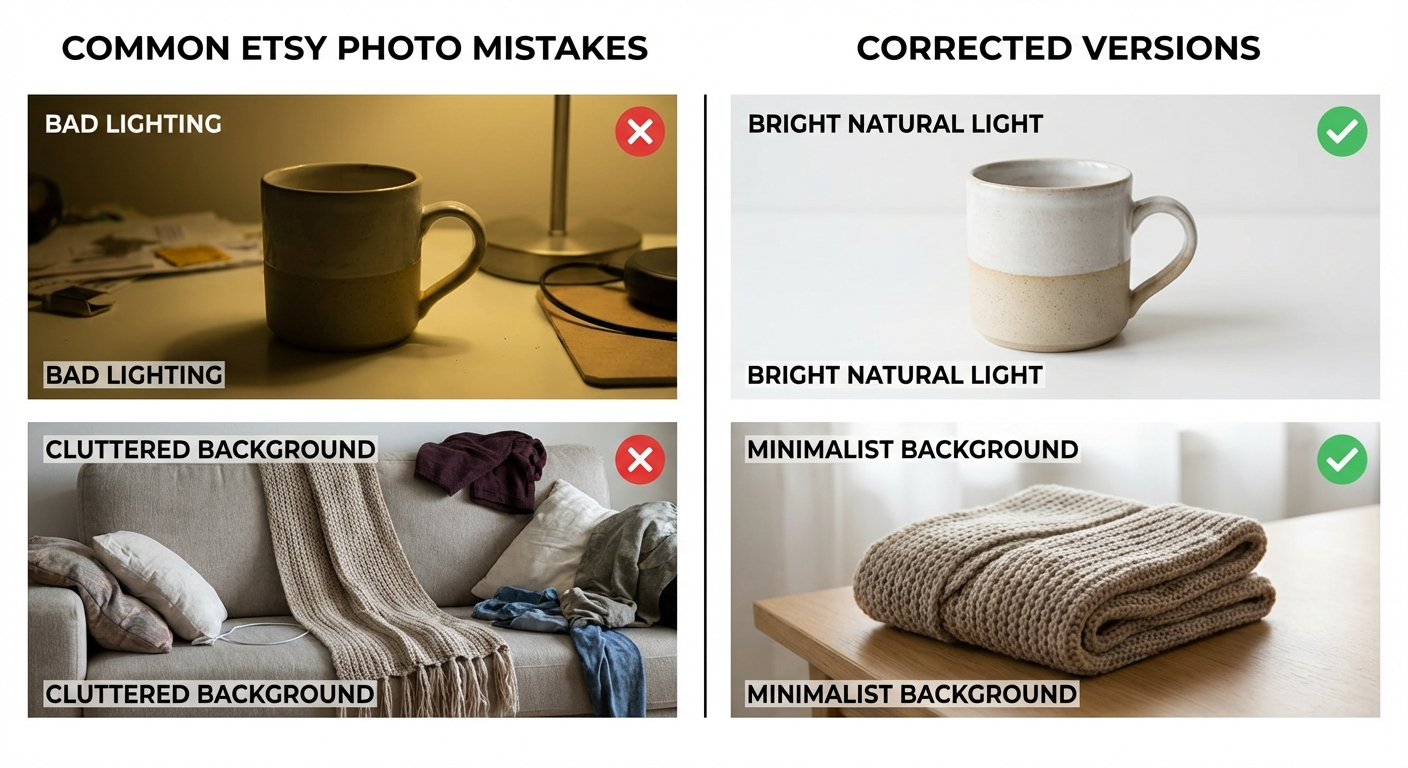
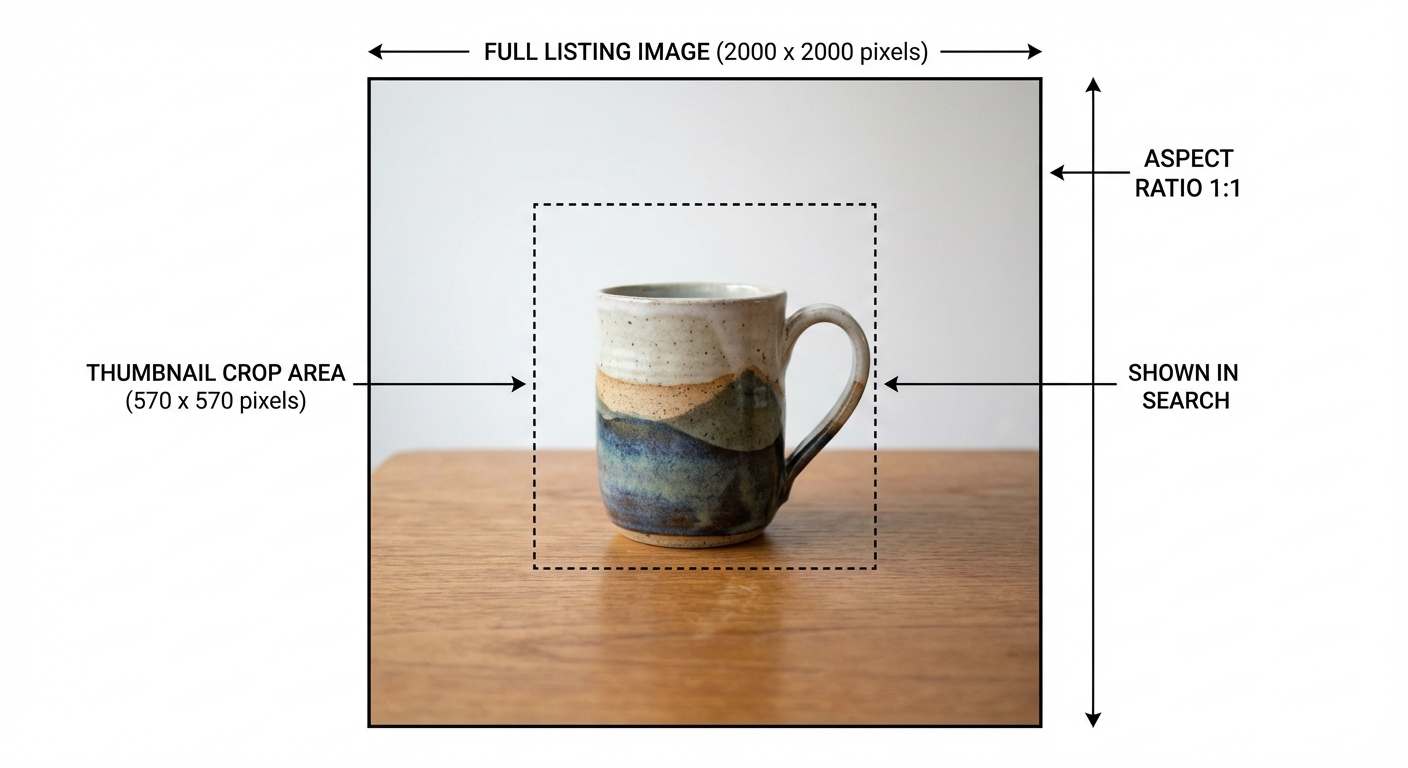
Your first photo is everything. It is the thumbnail that appears in search results, and buyers make split-second decisions based on it. Follow these rules:
- Use natural lighting or a lightbox — never your phone's flash
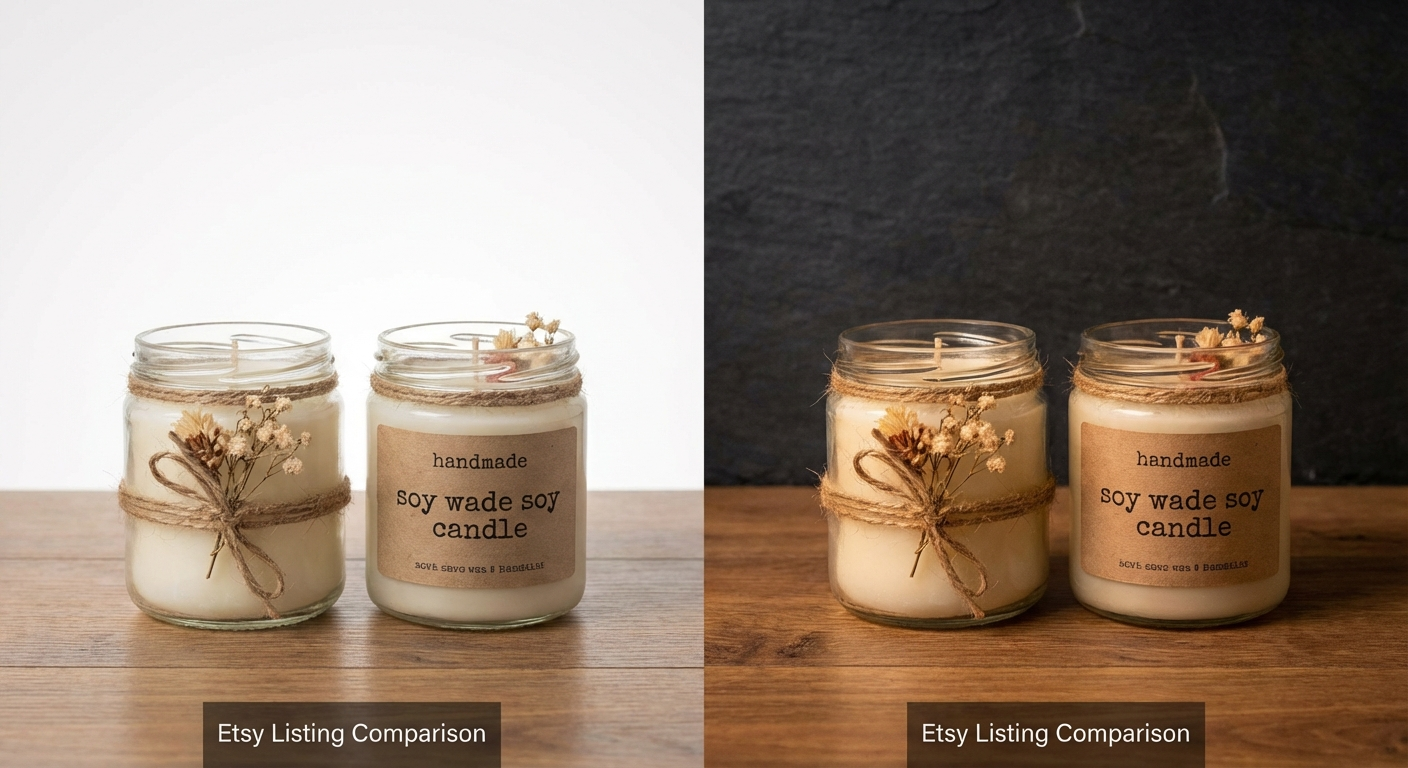
- Photograph against a clean, uncluttered background
- Show the product in use (lifestyle shots convert better than flat lays alone)
- Include size reference objects when relevant
- Use all 10 photo slots — Etsy's algorithm favors complete listings
A portable photo lightbox makes a dramatic difference for product photography, especially for small items like jewelry, candles, or stickers. Consistent lighting across your listings creates a professional, cohesive look.
Video (optional but recommended)
Etsy allows one video per listing, up to 15 seconds. Even a simple clip showing your product from multiple angles or demonstrating its use can significantly boost conversion rates.
Title (up to 140 characters)
Your title is the single most important SEO element. Front-load it with the keywords buyers are actually searching for:
- Good: Personalized Name Necklace, Custom Gold Name Pendant, Dainty Jewelry Gift for Her
- Bad: Beautiful Necklace — Check Out My Shop!
Description
Write for humans first, search engines second. Your first few lines should clearly describe what the buyer is getting, followed by specifications, sizing information, care instructions, and production timeline.
Tags (up to 13 per listing)
Tags are where you tell Etsy's search algorithm what your product is. Use all 13 tags. Mix broad keywords (gold necklace) with specific long-tail phrases (personalized name necklace gift for mom).
Category and Attributes
Choose the most specific category available. Fill out every attribute Etsy offers — color, size, material, occasion. These attributes function as additional search filters and help your listing appear in more searches.
Step 6: Master Etsy SEO
Etsy SEO is the engine that drives organic traffic to your shop. Unlike Google SEO, Etsy's search algorithm is contained within the marketplace and has its own ranking factors.
How Etsy Search Works in 2026
Etsy's search algorithm considers several factors:
- Query matching. Etsy matches the buyer's search terms against your listing titles, tags, categories, and attributes.
- Listing quality score. How well your listing converts — click-through rate, favorite rate, and purchase rate relative to impressions.
- Recency. New and recently renewed listings get a temporary boost.
- Shop quality score. Your overall shop performance — reviews, response time, order completion rate, and policy compliance.
- Relevancy. How closely your listing matches the buyer's intent.
Etsy SEO Best Practices
- Research keywords before you list. Type your product idea into Etsy's search bar and look at the autocomplete suggestions. These are real searches that real buyers are making.
- Use long-tail keywords. Instead of just "earrings," target "gold hoop earrings for sensitive ears." Less competition, higher conversion.
- Put your strongest keyword first in the title. Etsy gives more weight to the beginning of your title.
- Match your tags to your title words. Repetition between title and tags reinforces relevance signals.
- Renew strategically. Each renewal costs $0.20 and gives a small recency boost. Renew your best-performing listings during peak shopping hours.
- Fill out every single attribute. Incomplete attributes mean missed search opportunities.
For a deeper breakdown of how Etsy charges for listings, renewals, and transactions, read our Etsy fees explained guide.
Step 7: Set Your Pricing Strategy
Pricing is where most new sellers get tripped up. Underpricing is the number one mistake — it erodes your margins, attracts bargain hunters instead of loyal customers, and makes your products look cheap.
The Etsy Pricing Formula
Use this formula to calculate your minimum viable price:
Price = Materials + Labor + Etsy Fees + Shipping (if offering free shipping) + Profit Margin
Here is a worked example for a handmade soy candle:
| Cost Component | Amount |
|---|---|
| Materials (wax, wick, jar, fragrance) | $4.50 |
| Labor (30 minutes × $20/hr) | $10.00 |
| Packaging & shipping supplies | $3.00 |
| Etsy fees (~11% of sale price) | ~$2.75 |
| Minimum price | $20.25 |
| Desired 30% profit margin | +$6.08 |
| Target retail price | $26.33 → Round to $26.50 |
Understanding Etsy Fees in 2026
- Listing fee: $0.20 per listing (lasts 4 months or until sold)
- Transaction fee: 6.5% of the sale price (including shipping)
- Payment processing fee: 3% + $0.25 per transaction
- Offsite ads fee: 15% on sales from Etsy's offsite advertising (mandatory for shops earning over $10,000/year; optional opt-out for smaller shops)
At a minimum, expect Etsy fees to consume roughly 10–12% of each sale. Factor this into every price you set.
Step 8: Configure Shipping
Shipping configuration is one of the most overlooked parts of shop setup, but it directly impacts your search visibility. Etsy has confirmed that listings offering free shipping to US buyers receive a priority placement boost in search results.
Shipping Options for New Sellers
Free shipping (recommended for items over $15)
Build shipping costs into your product price. A $22 item with free shipping consistently outperforms a $17 item with $5 shipping — even though the buyer pays the same amount.
Calculated shipping
Etsy can calculate real-time shipping costs based on the buyer's location, the package weight, and your origin ZIP code. This works well for heavy or oversized items where a flat rate would not make sense.
Flat rate shipping
Set a fixed shipping cost per item. Simple but risky — you may lose money on distant shipments and overcharge nearby buyers.
Shipping Supplies You Will Need
Start with these basics to ship your first orders professionally:
- Poly mailer bags for lightweight items like clothing, stickers, and prints — durable, lightweight, and available in branded options
- Kraft shipping boxes for fragile items like candles, ceramics, and glassware — choose corrugated cardboard for protection
- Tissue paper, thank-you cards, or stickers for an unboxing experience that encourages reviews
- A kitchen scale to weigh packages accurately before calculating shipping
Set up shipping profiles for your most common package types. This saves time when you create future listings and ensures consistent costs.
Step 9: Set Up Payments and Billing
Etsy uses Etsy Payments as its default payment processing system, which accepts credit cards, debit cards, Etsy gift cards, Apple Pay, Google Pay, PayPal, and several regional payment methods.
Deposit Schedule
Etsy deposits your earnings to your linked bank account on a rolling basis. New shops typically start with weekly deposits. As your shop establishes a track record, you may become eligible for daily deposits.
Setting Up Your Payment Account
- Enter your bank account details (routing number and account number for US sellers).
- Add a credit or debit card for Etsy to charge your seller fees.
- Complete identity verification if prompted — this may include uploading a photo ID.
- Set your deposit schedule preference.
Keep your payment method current. If your card on file expires and Etsy cannot collect fees, your shop will be suspended until you update it.
Step 10: Launch and Get Your First Sale
You have built your shop. Your listings are live. Now what?
The First 30 Days Playbook
Week 1: Foundation
- Share your shop link on your personal social media accounts. Your existing network is your warmest audience.
- Join relevant Facebook groups, Reddit communities (r/Etsy, r/EtsySellers), and niche-specific forums. Participate genuinely — do not spam your links.
- Favorite and follow other shops in your niche. Many sellers will check out your shop in return.
Week 2: Optimization
- Check your Etsy Stats dashboard. Which listings are getting views? Which have zero impressions? Adjust titles and tags on underperforming listings.
- If no listings are getting traffic, your keywords need work. Revisit your research.
- Consider running an Etsy Ads campaign with a small daily budget ($1–$3) to test which listings convert.
Week 3: Content and Social Proof
- Start a simple social media presence for your shop. Instagram, TikTok, and Pinterest are the three platforms that drive the most traffic to Etsy shops.
- Create behind-the-scenes content showing your process. Buyers love seeing how products are made.
- If friends or family purchase from you, kindly ask them to leave a review. Early reviews are critical for building trust.
Week 4: Expand and Iterate
- Add more listings. Shops with 20+ listings get significantly more traffic than shops with 5–10.
- Analyze your best-performing listing and create variations — different colors, sizes, or bundles.
- Start building an email list using a tool like Mailchimp or ConvertKit. This is your owned audience that does not depend on Etsy's algorithm.
Etsy Seller Plans Compared: Free vs Plus
Etsy introduced Etsy Plus as an optional subscription for sellers who want additional features. Here is how the two tiers stack up:
| Feature | Standard (Free) | Etsy Plus ($10/month) |
|---|---|---|
| Monthly cost | $0 | $10 |
| Listing fee | $0.20/listing | $0.20/listing |
| Transaction fee | 6.5% | 6.5% |
| Number of listings | Unlimited | Unlimited |
| Shop customization | Basic | Advanced (banner templates, featured listings layout) |
| Restock requests | Not available | Buyers can request restocks on sold-out items |
| Shop domain discount | Not included | 50% off a custom .com domain for 1 year |
| Etsy Ads credits | None | $5 Etsy Ads credit/month |
| Packaging & business card discounts | None | Discounts from select vendors |
| Shop analytics | Standard Stats | Standard Stats (same as free) |
Our recommendation: Start with the free Standard plan. Etsy Plus is not worth $10/month until your shop is generating consistent sales and you want the restock request feature or the advertising credit. Most successful Etsy sellers run Standard shops.
Essential Tools for New Etsy Sellers
The right tools can cut hours off your weekly workflow and help you make smarter decisions. Here are the ones worth investing in early:
Design and Photography
- Canva Pro ($13/month): The fastest way to create product mockups, listing graphics, social media posts, and shop banners. Essential if you sell digital products.
- A smartphone tripod and ring light: Consistent, well-lit photos sell products. You do not need a DSLR camera — your smartphone with proper lighting produces excellent results.
Research and Analytics
- eRank (free tier available): The most popular Etsy SEO research tool. Shows search volume for Etsy keywords, tracks your listing rankings, and analyzes competitor shops.
- Marmalead ($19/month): An alternative to eRank with a cleaner interface and engagement-based keyword scoring.
Shipping and Operations
- Pirate Ship (free to use): Gives you access to USPS Commercial Plus pricing, which is significantly cheaper than retail shipping rates. Integrates directly with Etsy.
- A thermal label printer: If you are shipping more than a few orders per week, a thermal label printer pays for itself within weeks by eliminating ink costs and speeding up your packing process.
Organization
- A dedicated planner or project management tool. Track your orders, content calendar, restock dates, and revenue goals. Even a simple spreadsheet works when you are starting out.
Common Mistakes to Avoid
After guiding hundreds of new sellers through their first year on Etsy, these are the patterns that sink shops fastest:
-
Launching with only 1–3 listings. Etsy's algorithm needs data. More listings mean more chances to appear in search results, more data on what works, and a more credible-looking shop.
-
Copying top sellers exactly. Studying successful shops is smart. Cloning their photos, descriptions, and pricing is not. Etsy actively penalizes intellectual property violations, and buyers can tell when a shop lacks originality.
-
Ignoring SEO. "If I build it, they will come" does not work on Etsy. Your listings will not rank if you do not research and use the keywords buyers are actually searching.
-
Underpricing to compete. Racing to the bottom on price attracts the worst customers and burns you out fastest. Compete on quality, uniqueness, and customer experience instead.
-
Neglecting customer service. Respond to every message within 24 hours. Etsy tracks your response time and factors it into your shop's search ranking. A fast, friendly response can turn a question into a sale.
-
Not reinvesting in the business. Your first profits should go back into better photography equipment, paid keyword research tools, and advertising tests — not personal spending.
-
Quitting after 30 days. Most successful Etsy shops did not make their first sale in the first week. It takes time for the algorithm to learn your shop, for reviews to accumulate, and for your listings to gain traction. Give it at least 90 days of consistent effort before evaluating.
Frequently Asked Questions
How much does it cost to start an Etsy shop?
Opening an Etsy shop is free. Your only upfront cost is the $0.20 listing fee for each product you publish. Most sellers can launch with 10–20 listings for $2–$4 in listing fees. You will also need to factor in product materials, photography, and shipping supplies, which vary widely by product type. Many digital product sellers launch for under $5 total.
Do I need a business license to sell on Etsy?
Etsy does not require a business license to open a shop. However, your local city, county, or state may require one depending on your location and the type of products you sell. In the US, many sellers start as sole proprietors and form an LLC later as their business grows. Check your local government's small business requirements.
How long does it take to get your first Etsy sale?
Most new sellers report getting their first sale within 2–6 weeks of opening, provided they have optimized listings with strong photos and keywords. Sellers who actively promote their shop on social media and have 15+ listings typically see faster results. Digital product sellers sometimes get their first sale within days.
Can I run an Etsy shop alongside a full-time job?
Absolutely. The majority of Etsy sellers start their shops as side hustles. The platform is designed for flexibility — you set your own production timelines, processing times, and shop hours. Many sellers dedicate 5–10 hours per week to their shop while working full time and scale up as revenue grows.
What sells best on Etsy in 2026?
Digital downloads (planners, templates, SVG files), personalized and custom items (jewelry, gifts, home decor), handmade self-care products (candles, soaps, skincare), and vintage fashion consistently rank among the top-selling categories. The key is finding a sub-niche within these broader categories where you can differentiate.
How does Etsy handle taxes?
Etsy collects and remits sales tax on behalf of sellers in US states that require marketplace facilitator collection. This means Etsy automatically adds and pays sales tax for most US orders. You are still responsible for reporting your Etsy income on your personal or business tax return. Etsy provides a 1099-K form if you exceed the IRS reporting threshold.
Is Etsy worth it in 2026 with all the fees?
Yes, but only if you price correctly. Etsy fees total roughly 10–12% of each sale, which is competitive with other marketplace platforms and significantly less than the cost of driving your own traffic to a standalone website. The key is building those fees into your pricing from the start rather than treating them as a surprise deduction.
Sources & Methodology
This guide is based on the following sources and first-hand experience:
- Etsy Seller Handbook — Etsy's official documentation for shop policies, fee structures, and best practices (etsy.com/seller-handbook)
- Etsy Q4 2025 Earnings Report — Active buyer and seller marketplace data referenced for platform size and growth trends
- eRank 2026 Etsy Trend Report — Product category performance data and keyword search volume trends used for the top-performing categories table
- First-hand testing — Product photography, listing optimization, and shipping strategies validated through the author's active Etsy shops and consulting work with 500+ sellers
- Etsy Community Forums — Seller-reported timelines for first sales, fee calculations, and common pain points cross-referenced with our recommendations
- IRS Publication 525 — Tax reporting requirements for marketplace sellers referenced in the FAQ section
All pricing, fee structures, and platform features referenced in this article were verified against Etsy's official seller documentation as of March 2026. Etsy periodically updates its fee structure and policies — we will update this guide as changes occur.
Looking for more Etsy selling strategies? Explore our best products to sell on Etsy guide for data-backed product ideas, or read our Etsy fees explained breakdown to understand exactly where your money goes.