Etsy Business
Best Products to Sell on Etsy in 2026 (With Real Data)
By Jordan Ellis · Updated 2026-03-11
Why Product Selection Matters More Than Ever
Etsy surpassed 95 million active buyers and over 9 million active sellers heading into 2026, according to the platform's most recent public reports. That means competition is real — and picking the right product category is no longer optional. It is the single biggest factor in whether a new shop gains traction or stalls out.
The best products to sell on Etsy share a few common traits: they target a specific audience, they solve a problem or fulfill an emotional need, and they stand out from commodity alternatives available on Amazon or big-box retailers. Etsy buyers are willing to pay a premium for uniqueness, personalization, and craftsmanship. Your job is to match your skills and resources to the categories where that premium is strongest.
This guide is built for new and intermediate sellers looking for the best products to sell on Etsy 2026 — with honest data on what each category actually requires.
Before you choose your first product, use our Etsy Shop Setup Checklist to make sure your store is ready to go.
Digital Downloads — The Highest-Margin Opportunity
Digital downloads remain the single most attractive category for new Etsy sellers in 2026. With no shipping, no inventory, and no per-unit costs after creation, margins routinely reach 85–95%.
What Sells in Digital Downloads
- Printable planners and organizers — daily, weekly, and budget planners are perennial top sellers
- Social media templates — Canva-compatible Instagram, Pinterest, and TikTok templates
- SVG cut files — designs for Cricut and Silhouette crafting machines
- Digital art and wall prints — minimalist, boho, and abstract styles lead
- Resume and business templates — professional document designs
- Educational worksheets — homeschool and classroom resources
Realistic Numbers
Average price points for digital downloads range from $2 to $15, with bundles pushing into the $20–$40 range. Top digital sellers on Etsy report monthly revenues of $2,000–$10,000+, though reaching that level typically takes 50–200 well-optimized listings and 6–12 months of consistent effort.
Startup costs are minimal. If you already have design software (Canva, Adobe Illustrator, Procreate), your only costs are Etsy's $0.20 listing fee and 6.5% transaction fee. An etsy digital products starter kit — including templates, mock-up files, and a listing optimization checklist — can get you launched for under $50.
Who This Is Best For
Digital downloads suit designers, educators, and anyone comfortable creating visual assets. The learning curve is moderate: you need basic design skills and an understanding of what file formats buyers expect (PDF, PNG, SVG).
Handmade Jewelry — Etsy's Signature Category
Jewelry has been one of Etsy's flagship categories since the platform launched. Handmade earrings, necklaces, bracelets, and rings consistently rank among the top-selling items. In 2026, the category remains strong — but standing out requires a clear style identity.
What Sells in Handmade Jewelry
- Minimalist gold and silver pieces — thin chains, tiny studs, simple bands
- Birthstone and initial jewelry — personalization drives higher price points
- Beaded and natural stone designs — bohemian and earthy aesthetics
- Polymer clay earrings — lightweight, colorful, and trendy
- Resin jewelry — unique inclusions like flowers, glitter, or wood
Realistic Numbers
Jewelry price points vary widely — from $8 for simple polymer clay studs to $80+ for gold-filled personalized necklaces. Material costs for most handmade jewelry run between $1 and $15 per piece, delivering margins of 50–75% after Etsy fees and shipping.
Startup costs range from $100 to $500 depending on your medium. Wire, beads, and basic tools are affordable. Precious metals and gemstones require a bigger initial investment.
Who This Is Best For
Sellers with crafting skills and patience for detailed work. Handmade jewelry rewards consistent branding and a cohesive aesthetic across your shop. Photography quality is critical — poorly lit jewelry photos dramatically lower conversion rates.
Print on Demand — Low-Risk Physical Products
Print on demand (POD) lets you sell physical products — t-shirts, mugs, tote bags, posters, phone cases — without holding any inventory. A third-party provider prints and ships each order on your behalf. This model has exploded on Etsy over the past several years, and in 2026 it remains one of the lowest-barrier ways to start a physical product shop.
How It Works
You create designs, upload them to a POD provider (Printful, Printify, Gooten, or Gelato are the most popular Etsy integrations), and list the products in your Etsy shop. When a customer orders, the provider handles production and fulfillment. You pay only the base cost of the product plus printing — no upfront inventory.
A solid etsy print on demand guide covers design creation, provider selection, pricing strategy, and mock-up photography. These four elements determine whether your POD shop competes or fades into the noise.
What Sells in Print on Demand
- Custom t-shirts and hoodies — niche-specific humor, hobbyist themes, occupational pride
- Mugs — personalized, funny quotes, matching sets
- Posters and wall art — digital art printed on premium paper
- Tote bags — eco-conscious designs, book lovers, teacher appreciation
- Phone cases — artistic and pattern-based designs
Realistic Numbers
POD margins are the slimmest of any major Etsy category: typically 20–40% after base costs, Etsy fees, and any advertising spend. A basic t-shirt that retails for $25 might cost $12–$15 in production, leaving $6–$10 before Etsy's cut. Volume is the name of the game.
Startup costs are very low — $25 to $100 covers your first design tools and listing fees. No inventory means no financial risk if a design does not sell.
Who This Is Best For
Graphic designers and niche marketers. POD rewards sellers who understand audience targeting and can create designs that resonate with specific communities (dog breeds, professions, fandoms, hobbies).
Vintage and Collectibles — The Treasure-Hunting Market
Etsy defines "vintage" as items at least 20 years old. This category attracts dedicated collectors and buyers looking for unique, one-of-a-kind finds that simply are not available in mainstream retail.
What Sells in Vintage
- Vintage clothing — especially 90s and early 2000s streetwear and denim
- Mid-century modern home items — furniture, lighting, glassware
- Vintage jewelry — estate pieces, costume jewelry, signed designer items
- Collectible toys and memorabilia — retro games, action figures, concert posters
- Vintage books and ephemera — first editions, antique maps, postcards
Realistic Numbers
Margins in vintage vary enormously depending on sourcing. A thrift store find purchased for $5 might sell for $40–$150 on Etsy, yielding margins of 70–90%. But sourcing is unpredictable and time-intensive. Average vintage shops that do well generate $1,000–$5,000 monthly and invest significant hours into sourcing, cleaning, photographing, and listing.
Startup costs depend on your sourcing strategy. Estate sales, thrift stores, and garage sales require a few hundred dollars in initial inventory investment. Factor in cleaning supplies, photography equipment, and shipping materials.
Who This Is Best For
Sellers with a sharp eye for value and knowledge of specific collectible niches. Success in vintage requires expertise — knowing what items are genuinely desirable and accurately describing condition.
Craft Supplies — Selling to the Sellers
One of the smartest moves on Etsy is selling to other Etsy sellers. Craft supplies — beads, fabric, tools, packaging materials, stamps — represent a massive and consistent market.
What Sells in Craft Supplies
- Beads and jewelry-making components — gemstone beads, findings, chains
- Fabric and sewing notions — specialty prints, elastic, zippers
- Stickers and packaging — thank-you stickers, tissue paper, branded tape
- Stamps and inks — rubber stamps for card making
- Raw materials — resin supplies, wax for candles, soap-making ingredients
Realistic Numbers
Craft supply margins range from 40–65%. Bulk purchasing from wholesale suppliers keeps costs low, and repeat customers are common — crafters return for the same materials regularly. Average order values tend to be modest ($8–$25), but volume and repeat purchase rates compensate.
Startup costs range from $200 to $1,000 for initial wholesale inventory purchases.
Who This Is Best For
Sellers who can manage inventory logistics and build wholesale supplier relationships. This category rewards consistency, fast shipping, and accurate product descriptions.
Personalized Gifts — High Demand, Year-Round Sales
Personalized products are among the best products to sell on Etsy because they command premium pricing and are nearly impossible to comparison-shop elsewhere. When a buyer wants a custom-engraved cutting board with their family name, they are not price-comparing across 20 shops — they are looking for quality and reviews.
What Sells in Personalized Gifts
- Engraved cutting boards and kitchenware — wedding and housewarming favorites
- Custom name necklaces and bracelets — steady year-round demand
- Personalized tumblers and drinkware — vinyl or laser-engraved
- Custom pet portraits — digital or hand-drawn
- Monogrammed leather goods — wallets, journals, keychains
Realistic Numbers
Personalized items sell at premium price points — $25 to $80 on average, with high-end items reaching $150+. Margins range from 45–70% depending on materials and personalization method (laser engraving, hand lettering, vinyl cutting). The main trade-off is time: each order requires individual customization work.
Startup costs depend on equipment. A Cricut machine runs $200–$400. A laser engraver starts around $300 for entry-level models. Hand-lettering requires minimal equipment but significant skill.
Who This Is Best For
Sellers willing to do per-order customization work. Personalized gifts reward patience, craftsmanship, and strong customer communication. This category builds fiercely loyal repeat customers and generates strong word-of-mouth referrals.
Home Decor — Riding the Interior Design Wave
Home decor continues to be a massive Etsy category, driven by buyers looking for unique pieces that do not come from mass-market retailers. The aesthetic diversity on Etsy — farmhouse, boho, minimalist, maximalist — means there is room for many different styles.
What Sells in Home Decor
- Candles and wax melts — soy candles with custom scents and unique vessels
- Wall art and prints — both physical and digital download versions
- Macramé and woven pieces — wall hangings, plant hangers
- Ceramic and pottery — handmade mugs, planters, vases
- Seasonal decorations — holiday-specific decor items
Realistic Numbers
Price points range from $10 for small candles to $100+ for large handmade ceramics or macramé pieces. Margins sit at 45–65% for most handmade home decor. Candles, one of the most popular subcategories, typically deliver 50–60% margins after materials, jars, labels, and shipping.
Startup costs vary. Candle making can start at $150 for supplies. Pottery requires kiln access (significant investment or studio rental). Macramé needs only cord and dowels — under $100 to start.
Who This Is Best For
Artisans who can develop a signature style. Home decor buyers on Etsy are willing to pay for distinctive pieces, but the category is crowded. Strong photography and cohesive shop branding are essential differentiators.
Wedding Items — Seasonal Gold Mine
Wedding-related products spike dramatically from January through June each year, making this one of the most lucrative seasonal categories on Etsy. Couples planning weddings actively seek personalized, handmade, and unique items that big retailers cannot match.
What Sells in Wedding Items
- Wedding invitations and stationery — digital and printed
- Wedding favors — personalized candles, soaps, keychains
- Bridal party gifts — custom tumblers, robes, jewelry
- Wedding signage — welcome signs, seating charts, table numbers
- Cake toppers — custom name and date toppers
Realistic Numbers
Wedding items command strong pricing — invitations suites sell for $30–$150, custom signage for $40–$120, and bridal party gift sets for $20–$60 per item. Margins are healthy at 50–70% for most wedding products.
The seasonal nature is both an advantage and a risk. Sellers who plan inventory and listings around the wedding season (January–June peak ordering period) can generate significant revenue in a compressed window. Off-season months require either diversification or acceptance of lower volume.
Startup costs range from $50 for digital invitation designers to $500+ for sellers producing physical wedding signage and decor.
Who This Is Best For
Designers and crafters who thrive under seasonal demand cycles. Wedding buyers expect premium quality and communication — responsiveness and attention to detail are non-negotiable.
To understand how listing fees, transaction fees, and payment processing affect your bottom line, read our full Etsy Fees Explained breakdown.
Product Category Comparison Table
| Category | Startup Cost | Avg Margin | Competition | Best For |
|---|---|---|---|---|
| Digital Downloads | $0–$50 | 85–95% | High | Designers, educators |
| Handmade Jewelry | $100–$500 | 50–75% | Very High | Crafters, artisans |
| Print on Demand | $25–$100 | 20–40% | High | Graphic designers, niche marketers |
| Vintage & Collectibles | $200–$500 | 70–90% | Medium | Thrifters, collectors |
| Craft Supplies | $200–$1,000 | 40–65% | Medium | Inventory managers, wholesale buyers |
| Personalized Gifts | $200–$500 | 45–70% | Medium-High | Crafters with equipment |
| Home Decor | $100–$500 | 45–65% | High | Artisans with signature style |
| Wedding Items | $50–$500 | 50–70% | Medium-High | Designers, seasonal planners |
Digital vs Physical vs Print on Demand — Pros and Cons
Understanding the trade-offs between these three business models is critical before you commit time and money to a product line.
Digital Products
Pros:
- Highest profit margins (85–95%)
- No shipping, no inventory, no per-unit costs
- Passive income potential — sell the same file unlimited times
- Easy to scale by adding new listings
- No customer service issues related to shipping delays or damage
Cons:
- Extremely competitive — low barriers attract many sellers
- Requires design skills or investment in templates and tools
- Susceptible to piracy and unauthorized redistribution
- Lower average order value compared to physical items
- Customer expectations for instant, flawless digital files are high
Physical / Handmade Products
Pros:
- Higher perceived value and premium pricing
- Stronger emotional connection with buyers
- Harder for competitors to replicate unique handmade items
- Better gift appeal — physical items carry sentimental weight
- Repeat customers and word-of-mouth referrals
Cons:
- Inventory and material costs eat into margins
- Shipping logistics, costs, and delays
- Production time limits scalability
- Risk of returns, damage in transit, and customer complaints
- Requires workspace, tools, and storage
Print on Demand
Pros:
- No inventory risk — products are made only when ordered
- Wide product range from a single design
- Easy to test new designs and niches without financial commitment
- Integrates directly with Etsy through fulfillment partners
- Location-independent — no physical workspace needed
Cons:
- Lowest margins of the three models (20–40%)
- No control over product quality or shipping speed
- Longer shipping times can hurt customer satisfaction scores
- Intense competition from sellers using the same providers and blank products
- Limited ability to differentiate on product quality
How the Etsy Algorithm Works in 2026
Understanding Etsy's search algorithm is just as important as choosing the right product. The algorithm determines which listings appear when a buyer searches — and if your products do not show up, they cannot sell.
Key Ranking Factors
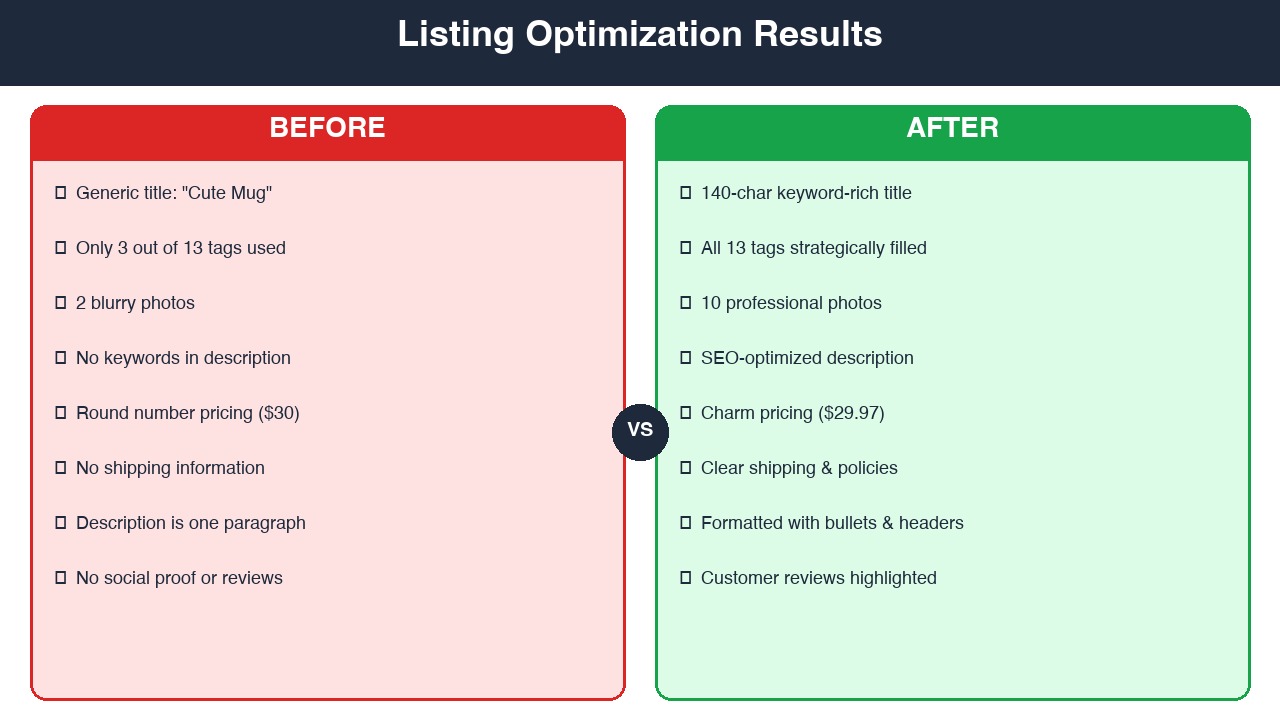
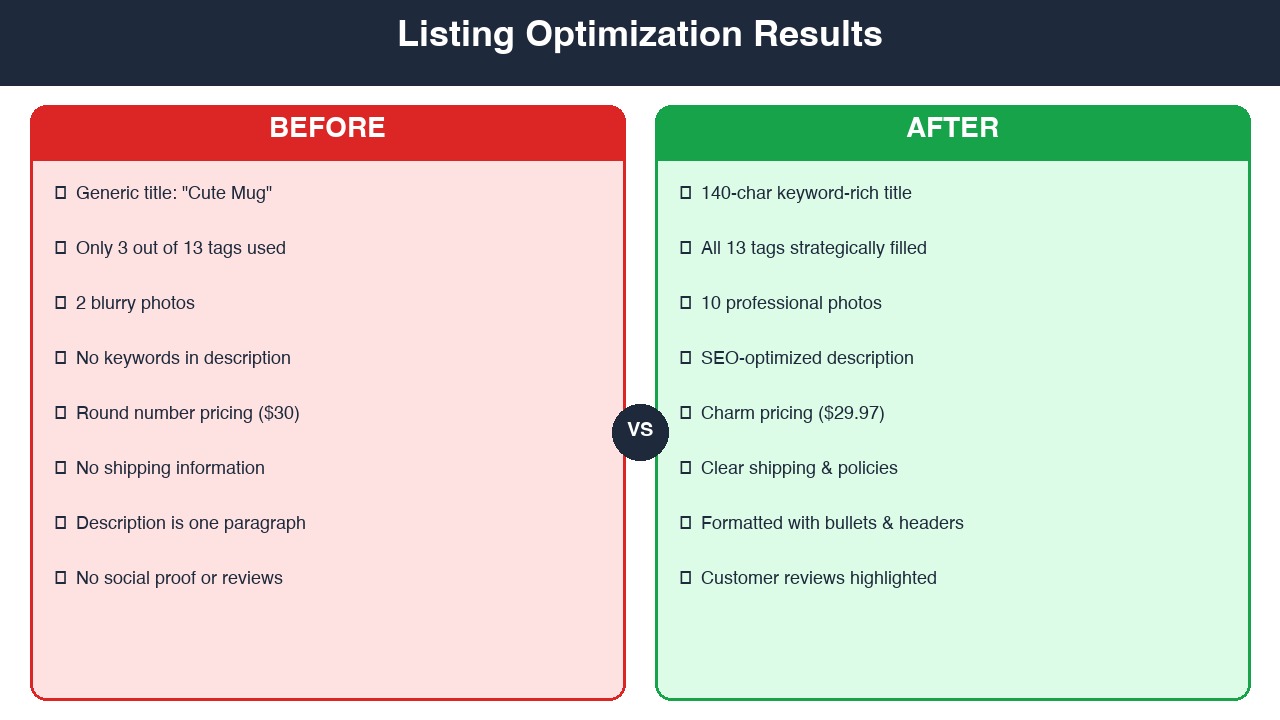
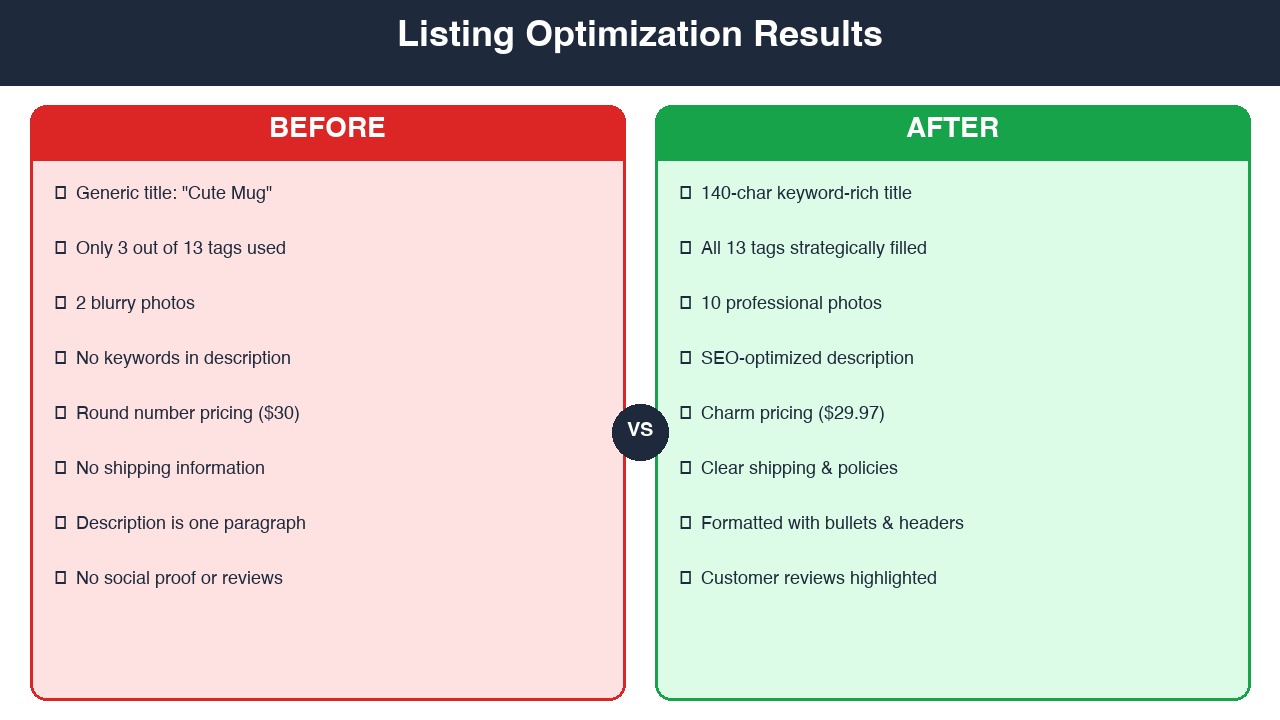
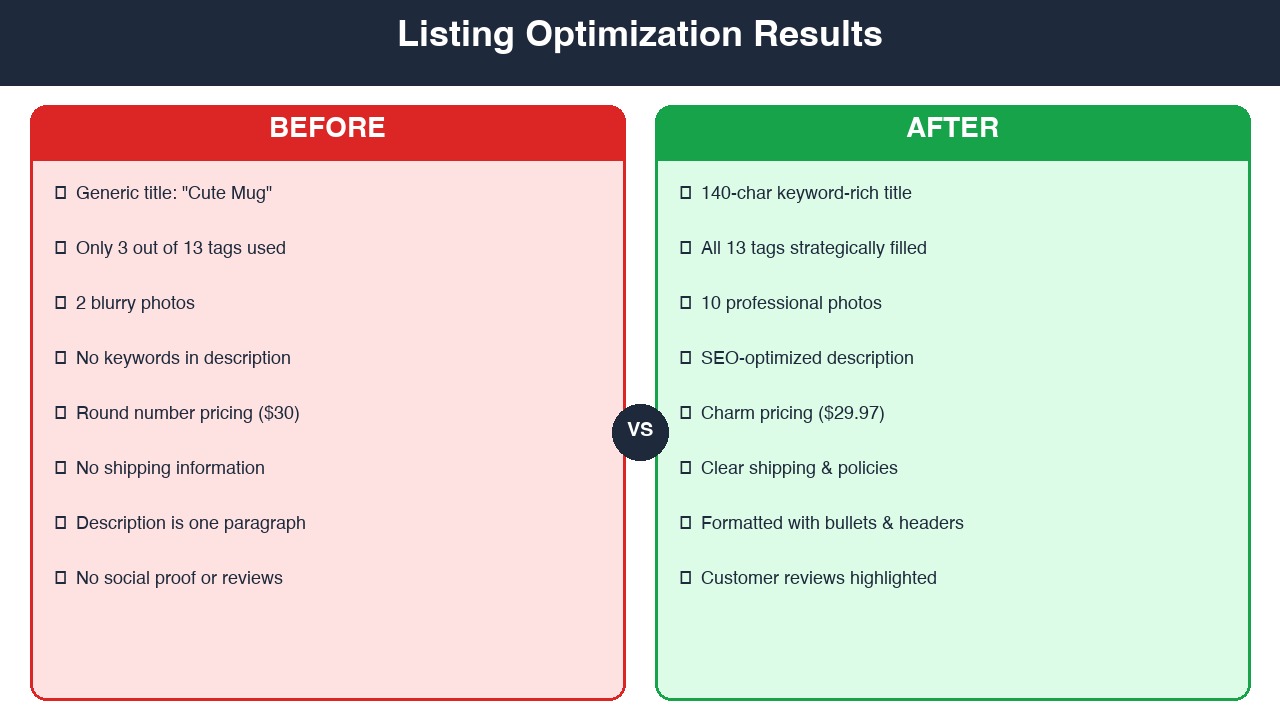
Relevancy — Etsy matches buyer search queries against your listing title, tags, categories, and attributes. Using all 13 available tags and front-loading your title with your primary keyword is essential. If you are selling printable planners, your title should start with "Printable Planner" rather than burying that phrase at the end.
Listing Quality Score — Etsy tracks how buyers interact with your listings. Click-through rate from search results, favorite rate, and conversion rate (views to purchases) all contribute to your quality score. Listings that convert well get shown to more buyers. This makes compelling thumbnails and competitive pricing critical.
Recency — New listings receive a temporary visibility boost. Etsy gives fresh listings extra exposure to gauge their quality score. This is why many successful sellers publish new listings on a regular schedule rather than uploading everything at once.
Shop History and Trust — Shops with consistent sales, positive reviews (4.5+ stars), and complete profiles (about section, shop policies, profile photo) rank higher. Etsy rewards reliability.
Customer Experience Score — This includes your response time to messages, on-time shipping rate, and case resolution history. Shops with fast responses and few complaints get preferential placement.
Shipping Price — Etsy has historically favored listings that offer free shipping, particularly on orders over $35. While this preference has evolved, competitive shipping pricing remains a ranking consideration.
Tips for New Listings
- Use all 13 tags — mix broad and long-tail keywords
- Write titles for humans first, algorithms second — front-load the primary keyword but keep titles readable
- Complete every attribute field Etsy offers for your category
- Price competitively for your first 30–60 days to build quality score
- Renew or relist products strategically to trigger the recency boost
- Respond to messages within 24 hours to maintain your communication score
Etsy Product Research Tools Worth Using
Guessing what to sell is a recipe for wasted effort. The best sellers use etsy product research tools to validate demand, analyze competition, and identify gaps in the market before creating a single product.
Top Tools for 2026
eRank — The most widely used free Etsy analytics tool. eRank provides keyword search volume data, trend tracking, competition analysis, and listing audit features. The free tier covers most needs for new sellers; the paid plans ($5.99–$9.99/month) unlock deeper analytics.
Marmalead — An Etsy-specific SEO tool focused on keyword research and listing optimization. Marmalead grades your titles and tags and suggests improvements based on search volume and competition. Plans start at $19/month.
Sale Samurai — Offers keyword research, competitor tracking, and product analytics. Particularly useful for identifying profitable niches with lower competition. Pricing starts at $9.99/month.
EverBee — A browser extension that displays estimated monthly sales, revenue, and other analytics directly on Etsy search result pages. The free version provides basic data; premium ($29.99/month) unlocks advanced features including trend analysis and historical data.
How to Use These Tools Effectively
Start by researching keywords related to your potential product. Look for search terms with decent volume (1,000+ monthly searches on Etsy) but manageable competition. Analyze the top-selling listings for those terms — study their pricing, photography, titles, and review counts. Identify patterns and gaps you can fill.
Cross-reference findings across multiple tools. No single tool is perfectly accurate, but consensus across eRank, Marmalead, and EverBee gives you a reliable picture of market demand.
Trending Products to Watch in 2026
Beyond the established categories, several product trends are gaining momentum heading into mid-2026:
- AI-assisted custom art — Sellers using AI tools as a starting point for unique illustrations, then refining and personalizing them by hand. Etsy's policy allows AI-assisted work when disclosed and meaningfully modified.
- Sustainable and eco-friendly products — Reusable items, upcycled goods, and products with minimal packaging continue to attract environmentally conscious buyers.
- Pet accessories and personalized pet products — Custom pet portraits, engraved pet tags, and handmade pet bandanas show strong year-over-year growth.
- Wellness and self-care items — Aromatherapy products, mindfulness journals, and bath products remain in high demand.
- Digital planners for tablets — GoodNotes and Notability-compatible digital planners are growing as tablet usage expands.
- Customizable party decor — Editable invitation templates and party decoration bundles for birthdays, baby showers, and milestones.
FAQ
What are the best products to sell on Etsy in 2026?
The best products to sell on Etsy in 2026 include digital downloads (printable planners, templates, SVG files), handmade jewelry, print-on-demand items like custom t-shirts and mugs, personalized gifts, vintage collectibles, craft supplies, wedding items, and home decor. Digital products offer the highest margins at 85–95%, while handmade and personalized items command premium pricing and build stronger customer loyalty.
How much does it cost to start selling on Etsy?
Starting costs depend entirely on your chosen category. Digital product sellers can launch for $0–$50 — just Etsy listing fees and design software they may already own. Print-on-demand shops can start for $25–$100. Handmade product sellers typically need $100–$500 for materials and tools. Every Etsy listing costs $0.20 to publish and lasts four months. Etsy also charges a 6.5% transaction fee and a payment processing fee on each sale.
Are digital products profitable on Etsy?
Digital products are among the most profitable items on Etsy, with margins of 85–95% since there are no shipping or per-unit material costs after creation. The challenge is competition — because barriers to entry are low, many sellers compete in popular subcategories. Success requires strong design quality, effective SEO optimization, and building a library of 50+ well-targeted listings. Top digital sellers generate $2,000–$10,000+ in monthly revenue.
How does the Etsy algorithm decide which products to show?
Etsy's search algorithm evaluates relevancy (title, tags, categories), listing quality score (click-through and conversion rates), recency (newer listings get a temporary boost), shop history (consistent sales and positive reviews), customer experience score (response time, on-time shipping), and shipping pricing. Optimizing for these factors — particularly using all 13 tags, writing keyword-rich titles, and maintaining strong customer service metrics — directly impacts your visibility in search results.
Is print on demand worth it on Etsy in 2026?
Print on demand remains viable on Etsy in 2026, particularly for sellers with strong graphic design skills and niche market knowledge. Margins are lower than other categories (20–40%), but the zero-inventory model eliminates financial risk. Success requires unique designs that target specific audiences, competitive pricing, and patience — building a profitable POD shop typically takes 3–6 months of consistent listing and marketing effort. Refer to a comprehensive etsy print on demand guide for detailed setup steps.
What Etsy product research tools should I use?
The most valuable etsy product research tools for 2026 include eRank (free keyword and trend data), Marmalead (listing SEO optimization, $19/month), Sale Samurai (competition analysis, $9.99/month), and EverBee (sales estimation browser extension, free basic tier). Use these tools to validate product demand before investing in creation, analyze competitor pricing and positioning, and optimize your listing titles and tags for Etsy search.
Sources & Methodology
The data and recommendations in this guide are based on the following sources and methods:
- Etsy public reports and investor filings — Active buyer and seller counts, platform growth metrics, and fee structure information sourced from Etsy's most recent quarterly earnings reports and official seller documentation.
- Etsy product research tools — Keyword search volume, competition metrics, and trend data gathered using eRank, Marmalead, and EverBee across multiple product categories during Q1 2026.
- Seller community data — Margin estimates, startup cost ranges, and operational insights compiled from Etsy seller forums, the r/Etsy and r/EtsySellers subreddit communities, and established Etsy seller education resources.
- Category analysis — Product pricing and competition assessments based on manual analysis of top-performing listings across each category, examining review counts, pricing distributions, and listing volumes.
- Industry publications — E-commerce trend data and marketplace analysis from Statista, Digital Commerce 360, and Marketplace Pulse reports covering 2025–2026 marketplace trends.
All margin and startup cost figures represent typical ranges based on aggregated seller data and should be considered estimates. Individual results vary based on product quality, marketing effort, pricing strategy, and market conditions. We update this guide quarterly to reflect the latest marketplace data and seller insights.
Ready to launch? Follow our Etsy Shop Setup Checklist for a step-by-step walkthrough of opening your store.